A Persian rug doesn’t demand much on an average day. Vacuum it, keep the wine glass a safe distance away, maybe rotate it once in a while so the sun doesn’t fade one corner more than the rest. That’s about it. But when the time comes for an actual deep clean, the method chosen matters far more than most people assume going in. Machine cleaning and hand washing are not the same thing wearing different names. They’re genuinely different processes, and picking the wrong one can undo months, sometimes years, of a weaver’s work in a single afternoon.
We hear this question constantly, honestly. Isn’t a machine just quicker and roughly the same result? Not really, no. The real answer depends entirely on the rug sitting in front of you. A proper Persian rug cleaning service doesn’t run every piece through an identical routine. It can’t. Not if it actually wants to get this right.
What Machine Cleaning Actually Does
Machine cleaning relies on mechanical agitation, water extraction, and often a rotating brush doing most of the physical work. It’s fast, no argument there. Efficient too. For plenty of rugs, this works out just fine.
Here’s the catch, though. A machine has no idea whether it’s working on a synthetic rug from a warehouse store or a hand-knotted Persian piece colored with actual plant dyes decades ago. It just does what it’s set to do, indifferent to what’s underneath the brush head.
A few things tend to go sideways here:
- Brush agitation loosening knots on older or more fragile weaves.
- High water pressure shoving dirt deeper into the pile rather than pulling it out.
- Fast drying cycles trapping moisture down in the foundation, which invites mold later on.
- Dyes that were never fully stable bleeding under repeated mechanical pressure.
None of that makes machines bad, exactly. They’re just doing a job they were never really built for in the first place.
When Machine Cleaning Makes Sense
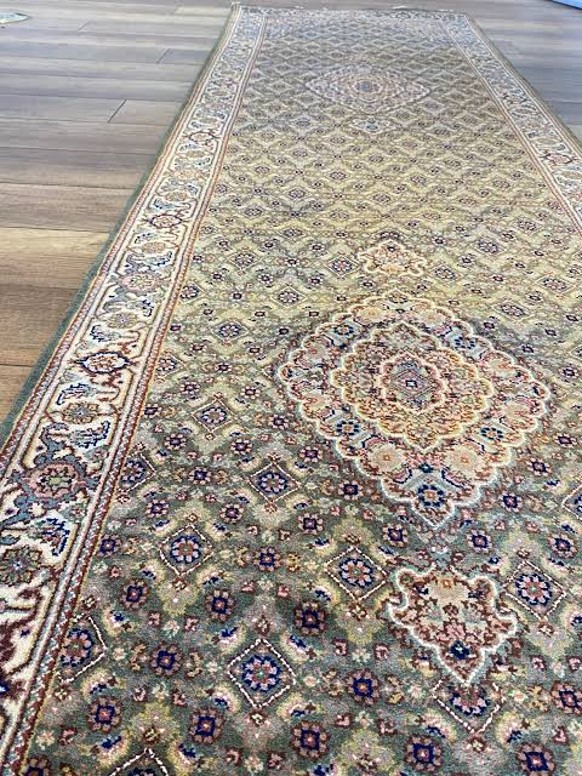
There’s a place for it, absolutely. Newer Persian-style rugs, machine-made reproductions, pieces without any delicate dye work involved- these can usually take a machine cleaning without much drama at all. When speed and durability matter more than preserving decades of handwork, it does the job reasonably well.
Why Hand Washing Is the Standard for Fine Persian Rugs
Hand washing takes longer. There’s just no getting around that part. But for anything handwoven, especially older pieces or ones carrying natural dyes, it’s really the only method that respects how the rug was made to begin with.
A proper hand wash tends to go something like this:
- Dusting first. Loose soil and grit come out before water touches anything. Skip this and you’re basically making mud, which helps nobody.
- Testing dye stability. A hidden corner gets checked so nothing runs once the actual washing begins.
- Gentle manual washing. Hands, soft brushes, controlled water. Nothing rough enough to stress the knots underneath.
- Rinsing, thoroughly, no shortcuts. Every trace of soap has to go, because leftover residue attracts dirt faster than it ever did before.
- Flat drying. Laid out evenly so the whole foundation dries at roughly the same pace. Uneven drying is exactly how warping starts.
This is really where luxury Persian rug cleaning pulls away from anything generic. It isn’t about piling on extra steps to sound impressive. It’s about matching the process to what a specific rug can actually survive.
The Risk of Getting This Wrong
Older rugs, the kind passed down through a family or picked up somewhere at auction, often have foundations that have quietly weakened over the years. Even when the surface still looks perfectly fine, what’s holding it together might not tolerate aggressive mechanical cleaning at all.
We’ve had rugs come through our doors that were cleaned once already, incorrectly, somewhere else entirely. And the damage didn’t announce itself right away either. Fringe slowly unraveling. Colors fading unevenly in patches nobody had noticed before. A slight give in the weave that simply wasn’t there a year earlier. That lag is exactly why the wrong method slips by unnoticed until it’s genuinely too late to reverse.
How to Tell Which Method Your Rug Needs
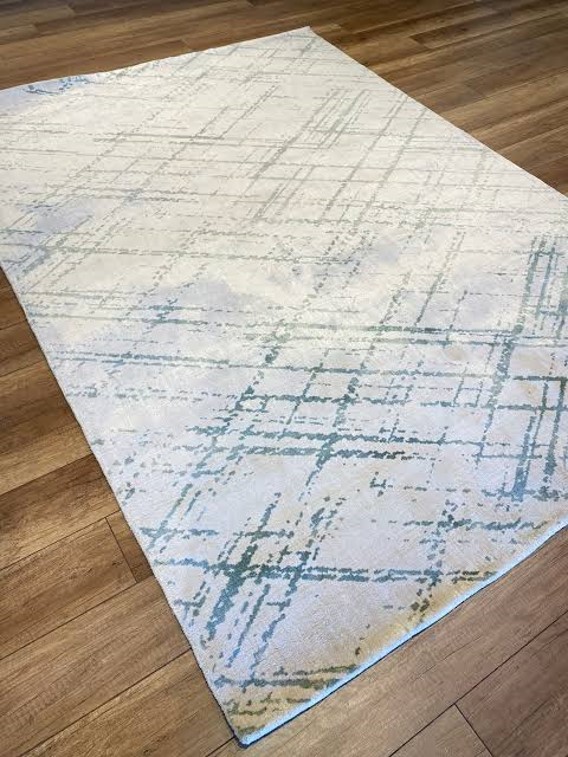
Not every Persian rug fits neatly into one bucket, which admittedly makes this harder than anyone would like. A few questions worth asking before deciding anything:
- Handwoven or machine-made? Hand-knotted pieces almost always need hand washing, practically no exceptions.
- How old is it, roughly? Anything carrying real history should lean toward the gentler route, every time.
- Natural dyes or synthetic ones? Natural dyes bleed far more easily under pressure than synthetic dyes do.
- Has it been cleaned before, and how did that turn out? Past problems tend to predict future ones with uncomfortable accuracy.
If there’s real uncertainty on any of this, get someone qualified to actually look at the rug before committing to either path. Guessing wrong here gets expensive fast, and not only in a financial sense.
Antique Pieces Need Extra Caution
Rugs carrying real age, decades sometimes, occasionally more, arrive with their own baggage. Fibers that have gone brittle in ways they weren’t a decade back. Old repairs that might not hold up against modern cleaning chemicals. Dye lots that were never perfectly matched even when the rug rolled off the loom.
Antique Persian rug cleaning means slowing everything down well beyond a standard hand wash. More testing along the way. More care during drying. Sometimes extra waiting between steps just to confirm nothing’s reacting poorly before moving forward at all.
Conclusion
Choosing between machine cleaning and hand washing really isn’t a question of convenience against tradition, even though it often gets framed that way. It comes down to what a particular rug can withstand without losing whatever makes it valuable to begin with. Machines certainly have their place, but fine Persian rugs, especially the older or handwoven ones, generally need the slower, more deliberate approach that only proper hand washing can provide.
At Zoom Rugs, we start by actually looking at the rug in front of us rather than reaching for a one-size-fits-all process, because that’s really the only honest way to protect something meant to outlast another generation.
Frequently Asked Questions
Is hand washing always better than machine cleaning for Persian rugs?
Not always, but for handwoven or antique pieces, hand washing tends to be the safer route since it avoids the mechanical stress machines can cause.
How do I know if my Persian rug is hand-knotted or machine-made?
Flip it over and check the back. Hand-knotted rugs usually show irregular patterns in the weave, while machine-made ones look almost too uniform, too neat.
Can machine cleaning damage older Persian rugs permanently?
It can, particularly where fibers have gone brittle, or dyes were never fully stable. The damage doesn’t always show up immediately, which is exactly why choosing the right method from the start matters.
Why does antique rug cleaning take longer than standard cleaning?
Antique pieces generally need extra testing and slower drying to account for fragile fibers, old repairs, or dye inconsistencies that simply weren’t a factor in newer rugs.