RUG REPAIR · RESTORATION
Rug Repair and Restoration Questions Answered: Costs, Lifespan and Care
What can be repaired, what rug restoration costs, how long a good rug lasts, and the sizing and placement questions people ask before investing in a rug.
A worn fringe, a frayed edge or a hole where the dog got bored is rarely the end of a good rug. Most damage to a handmade rug can be repaired by hand, and the earlier it is caught, the less of the original rug is lost. Here we answer the rug repair and restoration questions people around San Francisco ask most, plus the care and sizing questions that tend to come up in the same conversation. For details on what we do, see rug repair and restoration, or send photos through the form below for an estimate.
On this page: Repair and restoration · Old carpet and health · Choosing and placing a rug
Repair and restoration
Can a rug be repaired?
Yes. Almost every kind of damage to a handmade rug can be repaired by someone who knows how the rug was built. The most common repairs we see are:
- Fringe. Worn or missing fringe can be secured with a stitch along the ends, or new fringe can be woven back into the warp threads.
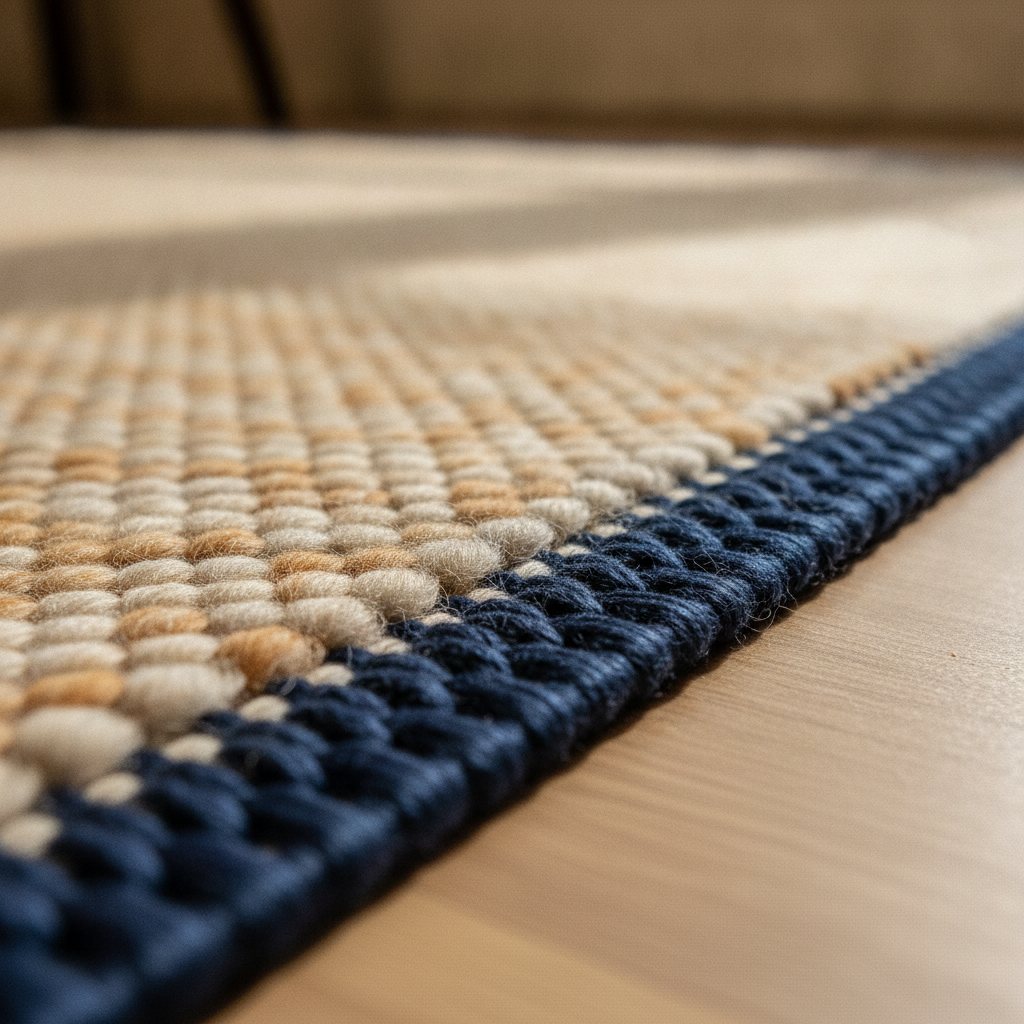
- Edges. The sides of a rug, its selvedges, take a lot of wear. They can be re-bound or overcast by hand with matched wool or silk.
- Holes and tears. The foundation is rebuilt thread by thread and the pile is re-knotted to match the original pattern and knot type.
- Moth damage. Grazed areas are re-knotted; deeper damage is rewoven first. More on moth repair.
- Color runs. Some dye bleeds can be corrected after testing.
A machine-made rug is a different case; its backing is glued rather than woven, so repairs are more limited. Either way, photos are the best first step.
How much does rug restoration cost?
Restoration is priced after inspection, because two holes of the same size can be very different jobs. What drives the price is the size of the damaged area, the knot density (a fine rug can have many times more knots per square inch than a coarse one), the materials, and how much color matching is involved.
Some work does have published rates. Edge binding, or serging, is $28 per linear foot by machine and $50 per linear foot by hand. Fringe securing and replacement, hole and moth repair, reweaving and color restoration are quoted after we have seen the rug, and you receive a written estimate before any work begins; nothing is added without your approval. The full list is on our pricing page. If you send photos of the whole rug, the damage and the back of the damaged area, we can usually give initial guidance before the rug is collected.
Can you restore worn carpet?
A worn handmade rug, yes, in most cases. Where the pile has worn down to the knots in high-traffic areas, it can be re-piled by hand with wool matched to the original, and weak edges and fringes can be reinforced so the wear does not spread. On an older rug, a little honest wear is often part of its character, so restoration is usually about stabilising the rug and rebuilding the areas that matter rather than making it look new.
Wall-to-wall carpet is a different product. Worn traffic lanes in broadloom carpet generally cannot be rebuilt, and the usual options are patching the area or replacing the carpet.
Can you repair just a patch of carpet?
In wall-to-wall carpet, yes: a carpet installer can cut out a damaged section and replace it with a matching patch, often from an offcut or a closet.
A handmade rug is repaired differently, and we would never cut a patch into one. The damaged area is rebuilt on the rug’s existing foundation, knot by knot, following the original design, so the repair becomes part of the rug rather than a piece sewn or glued in. Done well, it is hard to find the repair once the rug is back on the floor. How reweaving rebuilds holes and tears explains the process in more detail.
How many years should a rug last?
It depends almost entirely on how the rug was made. A machine-made synthetic rug typically lasts somewhere between a few years and a decade in normal use. A good hand-knotted wool rug is a different thing altogether: with regular cleaning, rotation and timely repairs, it can last for generations, and many of the rugs we care for are older than the people who own them.
What shortens a good rug’s life is mostly preventable. Dry grit in the foundation acts like sandpaper on the fibers, moths eat the wool, pet accidents damage the foundation, and small fringe or edge problems turn into bigger ones if they are left. Regular washing and fixing small damage early are the two things that matter most.
Old carpet and health
Is it worth cleaning 20 year old carpet?
If it is a quality rug, absolutely. A 20-year-old hand-knotted wool rug is often just reaching its best: the colors have softened and the wool has a lovely sheen. A proper wash removes the years of grit packed into the foundation, which is what would otherwise wear the fibers out, and it usually brings the colors back noticeably.
Old wall-to-wall carpet is a fairer question. If it is matted, worn through in places or holding onto odors after cleaning, replacing it may make more sense than another deep clean.
Is 10, 20 or 30 year old carpet unhealthy?
Age by itself does not make carpet unhealthy; what builds up in it can. Carpet that has not been deep cleaned for years can hold a lot of dust, allergens, pet dander and, if it has ever been wet, mold or mildew. Regular vacuuming and periodic professional cleaning keep that under control.
Area rugs have an advantage here that wall-to-wall carpet does not: they can be taken out of the house and washed completely, front, back and foundation, until the rinse water runs clear. If anyone in the house has allergies, a washable rug on a hard floor is easier to keep clean than fitted carpet.
Is it healthier to not have carpet?
Hard floors are easier to keep free of dust and allergens, which is why many allergy-conscious households choose them. But you do not have to give up the warmth, comfort and sound absorption that a rug brings.
A washable area rug over a hard floor is a good middle ground. You can vacuum the floor underneath, rotate the rug, and have it fully washed every few years, which is not possible with wall-to-wall carpet. Wool, in particular, is naturally resilient and holds soil in the pile rather than releasing it into the air, as long as the rug is cleaned regularly.
Is carpet outdated in 2026?
Wall-to-wall carpet has become much less common in living and dining areas, where hardwood, stone and tile floors are the norm, though it is still widely used in bedrooms. Area rugs over hard floors have stayed popular throughout, because they add warmth and color and can be moved, rotated or changed.
Handmade rugs sit outside trends altogether. A good Persian or Oriental rug is treated as a long-term piece rather than flooring, which is why people invest in cleaning and repairing them rather than replacing them.
Choosing and placing a rug
What is the 18 inch rule for rugs?
It is a designer’s rule of thumb for living and dining rooms: leave about 18 inches of bare floor between the edge of the rug and the walls. That gap frames the rug and makes the room feel larger and more deliberate.
In a smaller room, 8 to 12 inches usually looks better, because 18 inches would leave too small a rug. The underlying aim is the same: a rug big enough to anchor the furniture, with a visible border of floor around it. If a room is long and narrow, keep the borders roughly equal on all sides rather than chasing an exact number.
Should I get an 8×10 or 9×12 rug?
Let the room and the furniture decide. As a rough guide:
- An 8×10 suits most living rooms of around 11 by 14 feet, with the front legs of the sofa and chairs resting on the rug.
- A 9×12 suits larger rooms, or seating groups where you want all the furniture legs on the rug for a more generous look.
- Under a dining table, the rug should extend about 24 inches beyond the table on every side so the chairs stay on it when they are pulled out.
Before buying, mark the outline on the floor with painter’s tape and live with it for a day. Size also affects cleaning cost, since rugs are priced by the square foot; see what it costs to wash an 8×10.
Should your rug be lighter or darker than your couch?
Either can work. What matters is contrast, so the sofa and rug do not blur into each other. A rug that is darker than the sofa grounds the room and hides everyday soil better, while a lighter rug under a darker sofa brightens the space and makes it feel more open.
For busy rooms, mid-tones and patterns are the practical choice. Persian and Oriental designs, with their layered colors and borders, are very forgiving: they show far less day-to-day wear between cleanings than a plain light rug.
Related Zoom Rugs pages
These pages go deeper into the topics above:
- How rug reweaving rebuilds holes and tears
- When fringe wear becomes a structural problem
- Fringe repair and replacement
- Edge binding and overcasting for worn rug sides
- Antique rug restoration for family heirlooms
- Antique rug restoration in Palo Alto
More questions answered
- Moth-damaged rug repair: questions answered
- Persian rug cleaning: questions answered
- Area rug cleaning costs: questions answered
- Cleaning rugs and carpet at home: questions answered
Our services
- Rug repair and restoration services
- Hand-wash rug cleaning process
- Rug cleaning and repair pricing
- White-glove pickup and delivery
- All Zoom Rugs FAQs
For professional rug cleaning, repair or restoration in the San Francisco Bay Area, contact Zoom Rugs Services: call 408-472-6086, email info@zoomrugs.com, or send photos for an estimate.
REQUEST AN ESTIMATE
Request a Consultation
We will respond shortly to schedule your service or consultation. Prefer to talk? Call 408-472-6086.
CONCIERGE SERVICE
Entrust Your Rug to Specialist Hands
Hand-wash cleaning, repair and restoration for handmade rugs, with white-glove pickup and delivery across the Bay Area.
Call 408-472-6086